



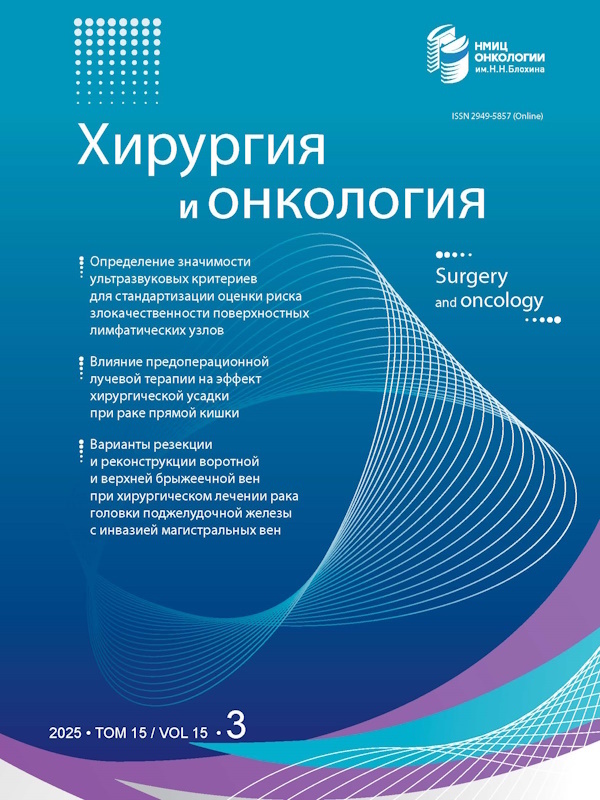
Surgery and Oncology
“Surgery and Oncology” is a scientific peer-reviewed quarterly journal. It was founded in 2010.
It is included in the List of leading peer-reviewed scientific journals of the Higher Attestation Commission, in which the main scientific results of doctoral and candidate of sciences dissertations are published, included in the Scientific Electronic Library and RINC, registered in CrossRef, articles are indexed with the digital identifier DOI.
The journal is represented in the leading Russian and world electronic libraries. The journal has been awarded the DOAJ Seal of Excellence.
From April 2025 included in Scopus.
Target audience: oncologists, surgeons, chemotherapists, radiologists, specialists in radiation diagnostics and therapy, pathomorphologists, anesthesiologists, endoscopists, geneticists.
Content: modern opportunities in diagnostics and treatment of oncologic and benign diseases are covered. Priority in the journal is given to the publication of the results of original research. The editorial board pays attention to the completeness of the presentation of information, which should ensure the reproducibility of the presented results. The results of individual clinical observations devoted to the treatment of rare diseases or the application of unique treatment technologies are published. The journal also presents literature reviews in which a systematic search of the material or meta-analysis of published data was conducted.
Volume: 60–80 pages
Frequency: quarterly
Russian Index of Science Citation: 0.595
H-index: 9
Online publication ЭЛ No. ФС 77-85909 dated 08/25/2023
*Former journal title:
– “Oncological coloproctology”, renamed in August 2019,
– “Pelvic Surgery and Oncology”, renamed in August 2023.
Current Issue
Vol 15, No 3 (2025)
- Year: 2025
- Published: 03.09.2025
- Articles: 11
- URL: https://onco-surgery.info/jour/issue/view/64
Full Issue

Articles
 10
10


LITERATURE REVIEW
Changes in clinical guidelines of 2023 and 2025 on treatment of cutaneous and mucosal melanoma
Abstract
The article presents a comparative analysis of Russian clinical recommendations on treatment of melanoma of the skin and mucous membranes during a period of 2020 and 2023, as well as foreign recommendations of N CCN (National Comprehensive Cancer Network) and ESMO (European Society for Medical Oncology) of 2025. The main debatable issues related to changes on melanoma therapy in 2025 are presented for discussion. The topic of modifying the treatment of patients with melanoma with metastases in the brain is highlighted. New treatment options for patients with metastatic and unresectable (stage IIIC–D) melanoma are discussed, as well as the neoadjuvant and adjuvant therapy options for stage II–III cutaneous melanoma. Various treatment options for patients with local stage melanoma are considered. Among other, the recommendations of 2025 are supplemented with treatment options for melanoma in children.
Aim. To highlight changes in clinical guidelines for treatment of melanoma of the skin and mucous membranes for use in daily clinical practice.
11-21
Resolution of the round table “Possibilities for modification of colorectal cancer progression risk factors in guidelines of the professional associations”
Abstract
In the article, evidence-based data on modifiable risk factors of colorectal cancer recurrence are presented. The possibility of supplementing the existing clinical practice guidelines with information on the effect of lifestyle and behavioral changes on overall and recurrence-free survival is discussed. Maintaining a high level of physical activity and smoking cessation can significantly improve long-term treatment outcomes. Data on the role of diet and alcohol consumption are contradictory and do not allow to make clear recommendations.
22-26
Techniques of pelvic floor defect reconstruction after extended surgeries of rectal cancer
Abstract
A significant proportion of patients with colorectal cancer are diagnosed at advanced stages, requiring extensive surgical procedures that create a substantial “dead space” in the pelvic cavity. One of the major complications of such interventions is perineal hernia formation, which significantly affects quality of life by causing pain, urinary dysfunction, bowel obstruction, fistula formation, and ulcerative skin defects.
Currently, various techniques exist for the prevention and management of this complication. Simple perineal wound closure is the most accessible technique; however, in cases of large defects, it does not provide reliable closure and is associated with increased risks of wound dehiscence, infection, and subsequent hernia formation.
Autologous reconstruction of the pelvic floor defect involves the use of flaps based on the rectus abdominis muscle (vertical rectus abdominis myocutaneous flap, VRAM), gracilis muscle (m. gracilis), gluteus maximus muscle (unilateral or bilateral), as well as skin flaps. The V RAM flap demonstrates low incidence of perineal hernias and acceptable survival rates but requires high level of surgical expertise and may not be feasible in laparoscopic approaches or in patients with multiple stomas. Graciloplasty is effective for selected patients, including those undergoing minimally invasive surgery, but it may be associated with a higher complication rates compared to V RAM. The use of gluteus maximus muscle flaps allows for defect reconstruction with good vascularization but carries risks of muscle function impairment and postoperative pain. Skin flaps are less invasive and may reduce the likelihood of hernia formation, though current statistical data remain limited.
Alloplastic reconstruction of the pelvic floor defect is performed using synthetic or biological meshes. Recent studies suggest that biological meshes significantly reduce the incidence of perineal hernias compared to simple wound closure. However, their use substantially increases treatment costs. The application of synthetic materials requires strict isolation of bowel loops from the mesh surface to prevent adhesions and infectious complications; experience with these materials and long-term outcomes remain limited.
Thus, the choice of pelvic floor reconstruction technique depends on defect size, the patient’s overall condition, the surgical team’s expertise, and the availability of necessary materials. A universal “gold standard” has not yet been established. Further multicenter studies and comparative analyses are needed to determine optimal indications for each method and to develop standardized clinical protocols.
27-35
ORIGINAL REPORTS
Multicentral study for determining the significance of ultrasonic criteria for standardizing the risk of malignancy in superficial lymph nodes
Abstract
Introduction. The study of lymphatic collectors state in oncological practice is important primarily for identification of prevalence of the pathological process. Various changes in the structure of the lymph nodes (LN) both in benign conditions and in cases of malignant lesions can have similar ultrasound (US) characteristics. The difficulty in interpreting US picture of LN is that there are no clear criteria for differentiation of these conditions. The proposed Russian project of Lymph-NodeRADS.RU classification presents a step-by-step assessment of U S characteristics of the LN by categories with mandatory consideration of the clinical history and the patient’s oncological history.
Aim. To determine the most significant US criteria for a standardized analysis of risks for malignant pathology of the superficial LNs with subsequent distribution into types according to the Lymph-NodeRADS.RU.
Materials and methods. A retrospective analysis of echograms of 246 surface LNs from 3 anatomical zones was performed: 155 head / neck, 56 axillary, 35 inguinal. Of these samples 71 were without and 175 were with malignant lesions. The presence and nature of 209 LN lesions were confirmed by morphological studies (cyto- or histological, including immunohistochemical assessments), of 37 – by clinical and laboratory parameters. The Random Forest machine learning method was used to determine significance of LN US parameters. The Mean Decline Accuracy criterion was used to quantify the effect of the traits.
Results. There is no US sign indicating a malignant process in the LN with a probability of 100 %. The greatest significance for the diagnosis of LN malignant lesions is a set of criteria: irregular or rounded shape, roundness index, fuzziness and discontinuity of the border, angular contours, impaired differentiation of echostructure and the presence of pathological inclusions, peripheral or mixed types of blood flow. Stratification of the LN US criteria by Lymph- NodeRADS.RU classification types revealed risk of malignancy of categories 1 and 2 in 0 % of cases, category 3–45.1 %, category 4–85.3 %, category 5–96.6 %.
Conclusions. For objective US assessment of surface LN, it is necessary to use a set of both qualitative and quantitative US characteristics. When employing the classification of Lymph-NodeRADS.RU it is necessary to take into account anamnestic and clinical data, especially in the case of a dubious US pattern of LN.
36-45
Types of resection and reconstruction of the portal and superior mesenteric veins in surgical treatment of pancreatic head cancer with invasion of the major veins
Abstract
Aim. To demonstrate feasibility, types and relative safety of resection and reconstruction of the portal and / or superior mesenteric veins invaded by tumor during surgical treatment of pancreatic head cancer.
Materials and methods. The study included patients with cancer of the pancreatic head and invasion of the portal and / or superior mesenteric veins who underwent thorough examination and surgical treatment at the N . N . Blokhin National Medical Research Center of Oncology in 2001–2023. Surgical volume depended on advancement of tumor invasion and included standard or extended Whipple’s procedure (WP), pylorus-preserving pancreaticoduodenectomy (PPPD) or pancreatomy. All surgical interventions included resection and reconstruction of the portal and / or superior mesenteric veins dependent on the advancement of tumor invasion. Surgical complications were evaluated per the Clavien–Dindo scale.
Results. Among 192 patients with pancreatic head cancer and invasion of the portal and / or superior mesenteric veins included in the study, 111 (57.8 %) were women and 81 (42.2 %) were men. Patient age varied between 31 and 77 years (median age 62 years, min–max 55–66). Standard WP was performed in 158 (82.3 %) patients, extended WP including aortocaval lymph node dissection in 6 (3.1 %) patients, PPP D in 6 (3.1 %) patients, and pancreatomy in 22 (11.5 %) patients. During surgery, all patients underwent resection of the major veins: only the portal vein was resected in 16 (8.3 %) cases (portal vein group), only the superior mesenteric vein in 83 (43.2 %) cases (superior mesenteric vein group), both veins in 93 (48.5 %) cases (portal and superior mesenteric veins group). In 48 (25 %) patients, tangential resection of the major veins of length between 0.5 and 3.5 cm with reconstruction using mural suture was performed; in the other 144 (75 %) patients, circular resection of length between 0.5 and 10.0 cm was performed. In the portal and superior mesenteric veins group, circular resection was significantly more common (89.3 %) than in the portal vein (62.5 %; р = 0.013) and superior mesenteric vein (61.5 %; р = 0.00001) groups. In 97 (50.5 %) patients with circular resection length below 4 cm, end-to-end anastomosis was constructed, in 6 (3.1 %) patients autologous vein was used, and in 41 (21.4 %) patients, synthetic Gore-Tex prosthesis was installed. Prosthesis was significantly more frequently used in the portal and superior mesenteric veins group (27.9 %) compared to the superior mesenteric vein group (14.5 %; р = 0.023). Three of 41 patients underwent prosthesis of the portal and / or superior mesenteric veins with a synthetic prosthesis with implanted splenic vein. Complications of surgical treatment were observed in 111 (57.8 %) patients, most commonly pancreatic fistula (18.8 %) and gastroparesis (17.7 %), bleeding from acute gastrointestinal ulcer (17.7 %) and pancreatic anastomosis failure (15.1 %). In 74 (38.5 %) patients, complication severity corresponded to grade III per the Clavien–Dindo classification. Bleeding from acute gastrointestinal ulcers was observed in 34 patients. The rate of bleeding complications in the portal and superior mesenteric veins group was 23.7 % which is significantly (р = 0.035) higher than in the portal vein group (12.5 %). After tangential resections bleeding rate was 18.8 %, after circular resections 17.4 %. The highest rate of bleeding (27.5 %) was observed in the portal and superior mesenteric veins group in patients after circular resection with ligation of the splenic vein, and it was significantly higher than in patients who underwent resection of only one of the two major veins (4.9 %). Additionally, bleedings were common in patients who underwent tangential vein resection (18.8 %), the rate was significantly higher than in patients who underwent circular resection of one of the major veins. Thrombosis of the portal or superior mesenteric vein developed in 11 (5.7 %) patients, thrombosis of the deep veins of the legs in 7 (3.7 %) patients.
Conclusion. Surgical treatment of patients with pancreatic head cancer and invasion of the portal and / or superior mesenteric veins is relatively safe and can include different types of vein resection and reconstruction. Depending on the indications, tangential resection with direct suture or circular resection can be performed using end-to-end anastomosis or synthetic prosthesis in which unaffected splenic vein can be implanted to prevent gastrointestinal bleeding in patients with portal hypertension or using a segment of autologous splenic vein. This allows to perform reconstruction of the major veins without a synthetic prosthesis.
46-53
Effect of preoperative therapy on surgical shrinkage in rectal cancer
Abstract
Background. The possibility of performing a surgical margin of less than 2 cm without increasing the risk of recurrence is an important problem. Most studies were conducted on a specimen examined after resection and formalin fixation without taking into account tissue contraction – surgical shrinkage. The effect of neoadjuvant treatment combinations on surgical shrinkage is also not determined.
Aim. To study the effect of shrinkage of the distal margin of resection of the rectum in colorectal cancer after formalin fixation, as well as the effect of preoperative therapy on the shrinkage.
Materials and methods. In total, 183 patients with histologically verified rectal and sigmoid colon cancer (adenocarcinoma G1–3) who underwent surgical treatment were prospectively analyzed. The distance between the lower pole of the tumor and the distal resection margin was measured immediately after excision. Then, this parameter was measured after fixation of the specimen in 10 % formalin solution.
Results. Median rectal shrinkage after formalin fixation of the specimen was 22.46 % in the surgical treatment group and 19.27 % in the radiation therapy group. In 101 cases, rectal shrinkage was more than 20 %. A statistically significant difference was found in the incidence of surgical shrinkage more than 20 % in the group of patients who did not receive radiotherapy (p = 0.045).
No statistically significant relationship was found between surgical shrinkage and gender (p = 0.135), tumor location (p = 0.082), or tumor advancement (p = 0.355). There was also no statistical significance between surgical shrinkage and the type of surgery (p = 0.225).
Conclusion. Measurement of the distal resection margin under different conditions influences the assessment of oncologic clearance when interpreting pathological findings and determining treatment outcomes. Radiotherapy is associated with higher probability of a lower degree of rectal shrinkage, which may be of significant importance in surgical treatment.
54-59
Comparative analysis of minimally invasive treatment of early rectal cancer
Abstract
Introduction. Currently, the main treatment method of early rectal cancer is surgery, and in the modern clinical practice minimally invasive methods that reduce perioperative risks are preferable.
Aim. To analyze the results of treatment of early rectal cancer using various minimally invasive surgical techniques.
Materials and methods. Retrospective analysis of patients with early forms of malignant rectal neoplasms subjected to minimally invasive surgery at the N . N . Alexandrov Republican Scientific and Practical Center of Oncology and Medical radiology between January 2013 and December 2023 was performed. All patients included in the final analysis were divided into two groups: the first group of patients underwent surgical treatment in the form of transanal tumor resection (TTR), the second in the form of transanal endoscopic microsurgery (TEM). Indications for minimally invasive surgery were: cancer invading only the submucosal or mucosal layers; small tumors less than 3 cm in size, not exceeding 30 % of the rectal circumference, without lymphovascular, perineural invasion, without clinical involvement of the lymph nodes, accessible for transanal full-thickness excision. The main endpoints were operative time, blood loss volume, postoperative in-hospital time, and postoperative complications (according to the Clavien–Dindo classification). Overall and recurrence-free survival were also evaluated for both groups.
Results. Patients (n = 66) with early forms of malignant tumors who received primary surgical treatment and were included in the final analysis were divided into groups depending on the surgical treatment received: transanal surgery (n = 49) and transanal endoscopic microsurgery (n = 17). Median follow-up was 47 months. Postoperative complications were observed in 4 patients: 2 (4.1 %) in the TTR group and 2 (11.8 %) in the TEM group (p = 0.235). The differences in overall and recurrence-free survival between the groups were not statistically significant (odds ratio 1.11; 95 % confidence interval 0.50–2.45; p = 0.795). Postoperative pathomorphological examination led to T category restaging in 31.4 % of cases, in 21.4 % of cases towards higher T stage. Additionally, 12 patients had pT2 stage (10 in the TTR group, 2 in the TEM group).
Conclusion. Transanal tumor resection and transanal endoscopic microsurgery have comparable complication and survival rates. In order to increase the accuracy of preoperative staging and to determine indications for minimally invasive surgery, it is necessary to carefully carry out preoperative procedures and provide an accurate diagnostic algorithm.
60-67
Induction chemotherapy regimens in malignant trophoblastic tumors with high risk of resistance: retrospective study
Abstract
Background. High sensitivity of gestational throphoblastic disease (GTD) to chemotherapy makes this disease highly curable, but rapid destruction of tumor can lead to development of life-threatening complications. Low-dose chemotherapy before the main anticancer treatment can reduce these risks, but the effects on long-term outcomes are not sufficiently studied. We conducted a retrospective analysis of the N . N . Blokhin National Medical Research Center of Oncology experience in treating patients with high- and ultra-high risk GTD treated with low-dose induction or full-dose chemotherapy.
Materials and methods. The monocenter comparative retrospective study included patients with high or ultra-high risk GTD who received initial treatment in 2000–2023. Patients with rare GTD subtypes, patients who had previously received any chemotherapy were excluded. Patients who received low-dose induction chemotherapy with etoposide + cisplatin comprised the experimental group, while those who received full-dose chemotherapy comprised the control group. After completion of low-dose chemotherapy, standard multidrug chemotherapy was administered until normalization of serum beta human chorionic gonadotropin (β-hCG), followed by consolidation chemotherapy. The primary endpoint of the study was 1-year progression-free survival.
Results. The study included 70 patients with GTD, 21 (30 %) patients received low-dose induction chemotherapy. In this group, more patients had ECOG performance status ≥2, clinically significant bleeding, or central nervous system metastases. With median follow-up of 54.6 months, 1-year progression-free survival was 81 % in the low-dose induction chemotherapy group and 90 % in the control group, the differences were not statistically significant (hazard ratio 1.63; 95 % confidence interval 0.46–5.80; p = 0.447). Complete β-hCG response was noted in 16 (77 %) patients in the lowdose induction group and 43 (88 %) patients in control group (p = 0.231). Three-year overall survival rates were 95 % and 98 %, respectively.
Conclusion. The results of this retrospective study show no differences in survival of patients with high-risk and ultra-highrisk GTD receiving low-dose induction chemotherapy. In treatment of patients with high risks of complications due to tumor process and/or drug therapy, low-risk induction chemoterhapy should be considered as an option
68-74
Results of surgical treatment of patients with cancer of the pancreatic body and tail and invasion of the celiac trunk
Abstract
Aim. To demonstrate relative safety, marked pain releif effect and satisfactory long-term results of surgical treatment of patients with ductal carcinoma of the pancreatic body and tail with invasion of the celiac trunk in the form of distal subtotal pancreatic resection (DSPR) with resection of the celiac trunk.
Materials and methods. The retrospective study included patients with cancer of the pancreatic head and tail with invasion of the celiac trunk who underwent DSPR with resection of the celiac trunk at the N . N . Blokhin National Medical Research Center of Oncology in 2001–2023. Surgical complications were evaluated per the Clavien–Dindo classification. At the preoperative stage, angiography was performed to thoroughly evaluate the condition of the collateral system between the superior mesenteric and common hepatic arteries. According to the criteria we developed during this study, patients with undeveloped collaterals underwent preoperative embolization of the common hepatic artery with metallic spirals preserving blood flow through the gastroduodenal artery. Considering patients’ complaints of local pain of varying intensity at hospitalization, we evaluated their pain syndrome using the V isual Analogue Scale (VAS) before and after surgical treatment.
Results. DSPR with resection of the celiac trunk and common hepatic artery was performed in 32 patients. In 8 (25 %) of them, due to undeveloped arterial collaterals between the systems of the superior mesenteric and hepatic arteries, 7–14 days prior to surgery embolization of the common hepatic artery was performed with preservation of blood flow through the gastroduodenal artery. In 18 (56.25 %) patients, superior mesenteric and / or portal veins invaded by the tumor were resected along with the celiac trunk. In 84.4 % of cases, the volume of surgical treatment was R0; in 9.4 % of cases, R1; in 6.2 % of cases, R2. Frequency of histologically confirmed invasion of the celiac trunk was 78.1 %, magistral veins 72.2 %, perineural invasion 90.6 %. A correlation (r = 0.55; р = 0.001) between the presence of perineural invasion and local pain at the preoperative stage was observed. Mean pain syndrome intensity per VAS in patients with perineural invasion was 7.3 points which was significantly (р = 0.000001) higher than in patients without perineural invasion (2.7 points). DSPR with resection of the celiac trunk and nerve dissection relieved pain syndrome in all patients. Complications after DSPR with resection of the celiac trunk were observed in 17 (53.1 %) patients, in 14 (43.7 %) their severity was grade III or higher per the Clavien–Dindo scale. Mortality was 6.3 %. Oneand 2‑year survival of patients with locally advanced ductal carcinoma of the pancreatic body and tail after DSPR with resection of the celiac trunk were 65.2 and 10.2 %, respectively, median overall survival was 15 months, maximal lifespan was 57 months. One- and 3‑year survival without signs of progression was 46.2 and 8.8 %, respectively, median progression-free survival was 9.9 months.
Conclusion. DSPR with resection of the celiac trunk and common hepatic artery is relatively safe, allows to relieve pain syndrome with significant improvement in the quality of life of the patients, and promotes longer survival.
75-81
Colorectal cancer in the population of the Republic of Tatarstan and its association with meteorological conditions and vehicle emissions
Abstract
Introduction. Episodes of air pollution are associated with climate variability, in particular with changes in the intensity and distribution of extreme weather events that affect the environment. Getting into the gastrointestinal tract, air pollutants can interact with the intestinal epithelium, contributing to the development of intestinal diseases, including colorectal cancer (CRC).
Aim. Aim of the study is to identify patterns of CRC incidence in the population of the Republic of Tatarstan (RT) and its dependence on meteorological variables and phenomena, as well as the mass of vehicle emissions.
Materials and methods. The following materials were used as initial data: on CRC incidence, data from the Cancer Register of the Republican Clinical Oncology Dispensary of the RT for the period of 2007–2023; on emissions into the atmosphere, data from the “State reports on the state of natural resources and on environmental protection of the Republic of Tatarstan” of the Ministry of Ecology and Natural Resources of the RT; on meteorological variables and phenomena, data from the Federal Agency for Hydrometeorology and Environmental Monitoring of the Russian Federation.
Results. An uneven distribution of colorectal cancer incidence is observed across the territory of the RT. A high level of colorectal cancer incidence was identified in the cities of Kazan and Naberezhnye Chelny: 55 cases per 100,000 population, while in the Cheremshan and Alekseevsky districts the value was 36 cases per 100,000 population. This research resulted in construction of a model that describes the relationship between the incidence rates of colorectal cancer, total emissions into the atmosphere, and the meteorological potential of atmospheric pollution. A forecast of colorectal cancer incidence for the period of 2025–2030 has been made, according to which with a probability of 95 % a decrease in the incidence of colorectal cancer to 37 cases per 100,000 population, which is close to the level of 2007, can be expected.
Conclusion. The obtained results can be used in planning measures to reduce the incidence of colorectal cancer in the population.
82-90

Регистрационный номер и дата принятия решения о регистрации СМИ: серия ЭЛ № ФС 77 - 85909 от 25.08.2023.